
What if there is NO driver in the car that crashed into me? Waymo, Autonomous vehicles and “Robot cars”
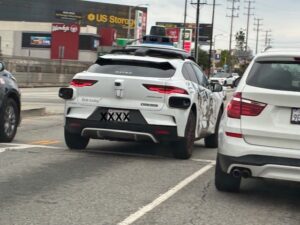
My grandchildren will yell out, “Robot Car!” when they see a Waymo driving next to us on the streets of Culver City, California, with no one at the wheel during the days I am driving them to school. These modified white Jaguar sedans, with cameras all over them, are becoming more prevalent, and are usually riding around with no one in them. We tease each other with questions like, “How come I never see a Waymo at the drive-thru window?” “Do Waymos like to go to the car wash?” and “Why don’t the Waymos ever wave back at us?”
But if someone is injured by a self-driving or autonomous car, it is serious business. How would the Waymo “testify” in Traffic Court? Could a Waymo be given a ticket if there was a violation of a traffic law? How would a police officer even ask for “license and registration?” WHO do you sue if you are injured by a Waymo or other vehicle with no live, human driver? If another driver, pedestrian, jogger or bicycle rider is injured by a Waymo, what rights do they have?
Doug Landau has actually had a case where his client was injured by what appeared to be a vehicle with no one inside. This incident was captured on surveillance videotape, so he was able to see the “driverless car” striking his client and not slow down or stop. Landau’s client, a nurse at Alexandria Hospital, was struck by a station wagon traveling at a high rate of speed, while she walking in the crosswalk to the employee parking lot. The film showed the impact, with no one behind the wheel or in any of the passenger seats. The impact broke both of her legs and left her with permanent impairment and scarring.

Law enforcement investigation revealed that a vehicle stopped down the road with an elderly man passed outing slumped over in the driver’s seat. When he was revived, her had no memory of the incident. Analysis of the video showed he was going in excess of the speed limit, never stopped, and struck the nurse in the middle of the well-marked pedestrian crosswalk in front of the Hospital. Lawyer Landau was able to win the workers compensation claim, even though the nurse had already “clocked out,” as she was carrying mandatory Continuing Medical Education (“CME”) reading materials to the assigned parking area controlled by her employer. Landau was also able to settle her car crash case against the unconscious “invisible” driver, even though the car insurance company tried to deny the claim, by asserting that the nurse was not looking, was running and was not in the crosswalk. Landau disproved all those defenses and settled BOTH the Virginia Workers Compensation claim AND the car crash negligence case.
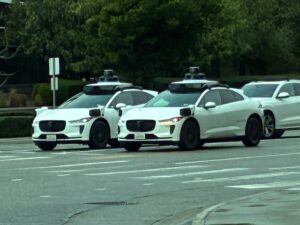
For cases against a Waymo or other autonomous or driverless car, the case would be against the manufacturer, dispatching software or programmer, possible the vehicle maintenance company, and of course, the owner of the modern computer assisted transportation mode. In cases where the Waymo “freezes” or road construction or other environmental factors cause a change in the road surface, stopping distances or traction (i.e., oil, debris, sand, washout, spills, etc.), there may be other cars and drivers involved in a multi-vehicle crash.
In multi-vehicle crash cases, sorting out the responsible parties is sometimes as important as the quantum of damages. These situations often involve figuring out whose motor vehicle insurance company pays first, second, third, etc. Negotiating which insurance company is primary, secondary, etc. sometimes requires Mediation, Arbitration or a special lawsuit filed in court to determine order of responsibility, set offs and liens (the legal term for an “IOU” to be paid out of settlement proceeds of jury verdict). The car crash team at ABRAMS LANDAU has helped injured victims navigate these complex cases, where several insurance companies for several unsafe drivers have caused injury to the Law Shop’s innocent clients. In addition to video and surveillance evidence, these case may require downloading information from the driverless cars’ computer systems, “black box” or other data storage repositories. Road engineers have suggested that these kinds of computer driver vehicles are very safe, but only in an environment with other driverless cars. When you mix “Robot Cars” with humans behind the wheel, their safety, predictability and logarithms may not fare so well.
If you, or someone you car about, has been injured in a crash with a Waymo, driverless car, autonomous vehicle or other computer operated mode of transportation, and there are questions about the evolving laws and evidence in these cases, please call us at once. Data has disappeared in cases where the injured victim thought everything was captured on surveillance cameras and human eye-witnesses’ memories fade. Plus, there are strict legal deadlines in personal injury cases. In other words, your “Robot Car” crash case could be lost if the time limits have run. Don’t let that happen, call us today.