
If my employer goes bankrupt, what happens to my Workers Comp case?
With the headline “major retailers filing for bankruptcy,” and the potential closure of Saks Fifth Avenue, Neiman Marcus, Bergdorf Goodman, and other well known American stores, injured and disabled employees receiving workers compensation benefits may wonder what will happen to their cases.
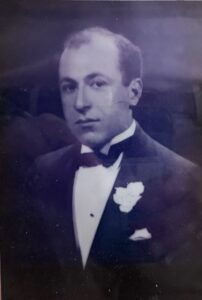
Saks 5th Avenue is over 100 years old, with its very famous flagship store opening in 1924, which is also when the ABRAMS LANDAU law firm’s namesake, William L. Abrams, first started practicing law after his graduation from Columbia University law school and the Harvard College. However, the Saks company started with its first doors opening in Washington DC in 1867, making it almost 159 years old. Bergdorf Goodman which has been in its current 5th Avenue location in New York City since 1928, is also known as a landmark in American luxury retail. The shift away from “brick & mortar” stores to online shopping has contributed to the demise of these behemoths of the retail industry.
But what does this mean for those retail brand salespeople, deliverymen, accounting department employees and maintenance crew members who are out on workers comp? Herndon Lawyer Doug Landau, who has had a number of retail store injury cases, notes that even if an injured employee’s company goes out of business, if they are under the protection of AWARD, the insurance company should still be able to pay the medical, wage loss, and other benefits under an AWARD from the Virginia Workers Compensation Commission. Landau goes on to state that, “even if the employer STORE, their insurance company, and even their third-party administrator go broke, Virginia has a Uninsured Employers Fund (the UEF”) that is quite solvent. The UEF has paid significant benefits where either there was no insurance, a failure of insurance, or even, in a death case due to a fall at the Interstate 395 & 495 mixing bowl project that we won, it was not valid outside of Texas.”

The good news is that employers, like ABRAMS LANDAU, Ltd., pay an extra several cents on the dollar in workers’ compensation insurance premiums into this Uninsured Employers Fund to protect injured citizens whose:
A. company may have tried to avoid paying workers’ comp,
B. company failed to have the correct workers’ compensation insurance in place, or
C. workers’ compensation insurer has become insolvent.
While the Uninsured Employers Fund generally does not settle cases in excess of $25,000 and will usually not agree or stipulate to AWARDS, permanency, or other significant indemnity benefits, at least we know that benefits can be paid, as the money is there. Very often, after the Uninsured Employers Fund pays benefits for a valid workers’ compensation claim, or on behalf of an employer that should have planned better, it then pursues the company that failed to provide the required insurance to recover the money through a subrogation claim.

The key takeaways for the uninsured Employers fund are:
1. Its purpose is to pay benefits for medical care, lost wages, disability, pregnancy-related claims, medications, and durable medical equipment to injured workers when their employer does not have the required workers’ compensation insurance. In Virginia, workers’ compensation insurance is required for every employer with three or more full-time regular workers. This means that if you have a nanny, two farmhands, or operate a small “mom-and-pop shop,” you likely do not need coverage.
2. It is funded by employers who do maintain proper workers’ compensation coverage. A small tax on workers’ compensation insurance premiums is assessed against all employers throughout the Commonwealth, including ABRAMS LANDAU, Ltd. This assessment was set at 0.05% for 2024.
3. There remains responsibility on the part of the employer, even if uninsured. In other words, the uninsured employer must reimburse the Uninsured Employers Fund for payments made and may face penalties. Doug Landau has been involved in cases where an employer was penalized for not having workers’ compensation insurance even before the Hearing on the merits of his client’s workplace injury. In other cases, an employer was able to show that it had purchased workers’ compensation insurance, but due to a technicality or fine print in the contract, the insurance company did not provide benefits. In those situations, lawsuits filed after Landau secured workers’ compensation benefits for his client enabled the employer to recover its losses.
Cases involving employers that go bankrupt, insurance companies that go out of business, or corporations that merge or disappear can be quite complicated. Doug Landau has successfully helped injured workers who have been involved in all of these situations. If you, or someone you care about, has been injured on the job and their employer, insurance company, or any corporation involved in their benefits is considering bankruptcy, merging, going out of business, or changing its name, and you have questions about the laws involved, please contact ABRAMS LANDAU, Ltd. at 703-796-9555.