What Happens to Your Northern Virginia Personal Injury Case If the At-Fault Driver Has No Insurance or Minimum Limits?
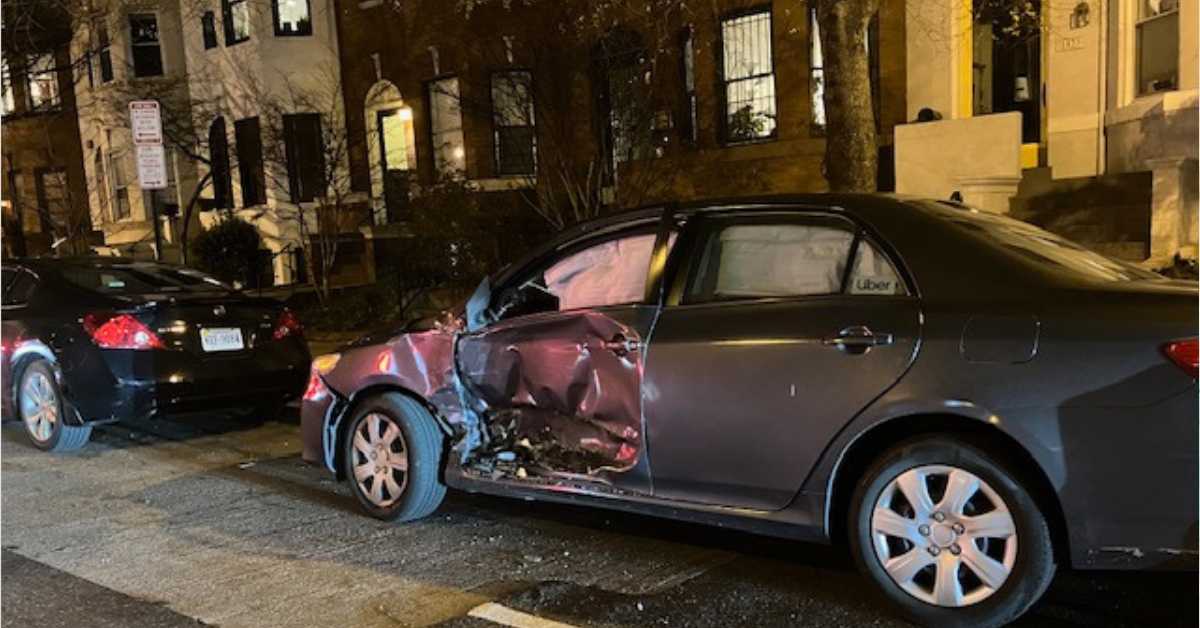
If the driver who hit you in Northern Virginia has no insurance or minimum limits that don’t cover your injuries you are not out of options. Virginia law gives you at least two recovery paths: your own Uninsured/Underinsured Motorist (UM/UIM) coverage and, in some cases, the Virginia Motor Vehicle Accident Compensation (MVAC) fund. The critical threshold to know right now: Virginia’s minimum liability limit is only $50,000 per person, and $100,000 per crash, amounts that disappears fast in any serious crash. This changes when you have significant UM/UIM coverage that may be able to be stacked on top. Especially when the at-fault driver has zero insurance and MVAC becomes your backstop.
Virginia Just Changed the Rules, But the Problem Didn’t Go Away
Here’s something most people don’t know. For decades, Virginia was one of the only states in the country that let drivers legally skip auto insurance by paying a $500 annual Uninsured Motor Vehicle (UMV) fee to the DMV. That fee didn’t buy you any coverage, it just bought you the legal right to drive uninsured. Thousands of Virginia drivers took that deal.
Virginia Code § 46.2-706 was amended effective January 1, 2024, eliminating the UMV fee option entirely. Auto liability insurance is now mandatory for every driver on Virginia roads. That is genuinely good news over time.
But here’s the hard truth we tell folks who call us after a crash. The 2024 law change doesn’t instantly fix the problem. Drivers who ignored the old fee requirement aren’t suddenly going to buy insurance because the law changed. Enforcement is imperfect. Lapsed policies happen. And even among drivers who are technically insured, Virginia’s minimum liability limits ($50,000 per person, $100,000 per accident, $20,000 for property damage) are so low that a single hospitalization can blow right past them.
So if you’re sitting in a Northern Virginia emergency room right now, or you’re the family member trying to figure out what comes next, the question isn’t just “did they have insurance?” The question is “does the coverage that exists actually cover what happened?”
Your Own UM/UIM Coverage: The Safety Net You (Hopefully) Have
This is where most of the real recovery happens in uninsured and underinsured driver cases and it’s the part that surprises people most.
Uninsured Motorist (UM) coverage pays when the at-fault driver has no insurance at all. Underinsured Motorist (UIM) coverage pays when the at-fault driver’s insurance exists but isn’t enough to cover your damages. Both coverages come from your own auto insurance policy, and under Virginia law, insurers are required to offer them.
Here’s what we tell every client who comes to us after a crash with an uninsured or underinsured driver.
Pull out your own declarations page immediately. Look for UM/UIM limits. If you have $100,000 in UM/UIM coverage and the at-fault driver has zero insurance, your own carrier steps into the at-fault driver’s shoes and you pursue your claim against the unsafe driver. If a judgment is paid, your insurance company can often collect against the at-fault driver in later proceedings. This is a headache you can avoid, as you will have already been paid in a settlement or gotten a judgement.
Your own insurer is not automatically on your side. This surprises people. Even though you’ve paid premiums for years, your insurance company has a financial interest in paying you as little as possible on a UM/UIM claim. They will investigate, they may dispute liability, and they may lowball your damages. At Abrams Landau, we’ve seen this play out repeatedly and we handle UM/UIM claims the same way we handle claims against any other defendant…aggressively, with full documentation of every injury, every lost wage, and every future medical need.
Stacking matters. If you have multiple vehicles on your policy, Virginia law may allow you to “stack” UM/UIM limits across those vehicles, potentially multiplying your available coverage. Whether stacking applies depends on your specific policy language — this is exactly the kind of detail that changes the outcome of a case and that you need a lawyer to review. The Abrams Landau car crash team recently resolved a case for a bicycle rider who was struck by a truck driver who had been drinking and had taken drugs. However, this Defendant only had the minimum limits insurance policy on his pick up truck. Because of the Abrams Landau teams deep experience stacking, coordinating benefits and negotiating “IOUs” from medical facilities and health insurers, they were able to get their injured client a NET settlement of over a million dollars, tax free by combining the biker’s and his resident family members’ car insurance policies.
Don’t give a recorded statement to your own UM/UIM carrier without talking to us first. Virginia law requires you to cooperate with your insurer, but “cooperation” does not mean waiving your rights or accepting their framing of what happened. We will never let a client walk into that conversation unprepared.
When There’s No Insurance and No UM/UIM Coverage: The MVAC Fund
If you were hit by a genuinely uninsured driver and you don’t have UM/UIM coverage on your own policy, Virginia maintains a last-resort fund called the Motor Vehicle Accident Compensation (MVAC) program, administered by the Virginia Workers’ Compensation Commission.
MVAC is not a generous program. Current caps are limited, the application process has strict requirements, and you generally must show that you made a good-faith effort to identify and pursue the uninsured driver before the fund will step in. But for injury victims who have no other path to recovery, it exists. And knowing how to navigate it correctly matters.
A few things to understand about MVAC…
You must report the accident to law enforcement and cooperate with their investigation.
You must file a claim within the statutory deadline.Missing it forfeits your right to the fund entirely.
The fund covers bodily injury and death, but property damage claims have their own separate requirements.
MVAC is administered through the Virginia Workers’ Compensation Commission, the same body where we practice workers’ comp law every day. We know the process.
What We Do Differently at Abrams Landau
We will never tell you that an uninsured driver case is simple. It isn’t. But we will tell you exactly what we do when a client calls us after being hit by someone with no insurance or inadequate coverage.
First, we immediately investigate the at-fault driver’s actual financial picture. Sometimes a driver who appears uninsured had a policy that lapsed the week before the crash and that creates a different set of arguments entirely. Sometimes there’s a commercial vehicle involved, or an employer’s policy that extends to the driver. We don’t assume the first answer is the final answer.
Second, we review every insurance policy that could possibly apply the client’s own auto policy, any household member’s policy, umbrella policies, employer policies if the client was working at the time. In Northern Virginia, we’ve found coverage in places clients didn’t know to look.
Third, we preserve evidence fast. On the Capital Beltway, the Dulles Toll Road, and Fairfax County Parkway, surveillance footage gets overwritten in days. “Black box” data from the at-fault vehicle can disappear. We send preservation letters immediately because the evidence that proves what happened is often the same evidence that proves what the at-fault driver’s actual insurance status was at the moment of the crash.
We will not take a case we don’t believe in, and we will not promise you an outcome we can’t guarantee. What we will do is give you a straight answer about what your options actually are because you deserve that. And because making the right decision early is the difference between a case that gets resolved and one that falls apart.
One More Thing: Minimum Limits Cases Are Underinsured Cases
Even when the at-fault driver technically has insurance, $50,000 doesn’t go far. A single night in a Northern Virginia hospital can cost more than that. Spinal injuries, traumatic brain injuries, orthopedic surgeries – these cases routinely generate medical bills that dwarf Virginia’s minimum liability limits.
If your damages exceed the at-fault driver’s policy limits, your UIM coverage kicks in to bridge the gap, but only up to your own policy limits, and only after the at-fault driver’s coverage is exhausted. The math on these cases requires careful analysis. We do that analysis for every client before we advise them on whether to accept a policy limit offer or push further.
If you’ve been hurt by an uninsured or underinsured driver in Northern Virginia, or you’re trying to figure out what your options are on behalf of someone you love, call or text us at (703) 796-9555 or email frontdesk@landaulawshop.com. The first conversation is free and confidential. We’ll give you a straight answer about what the coverage picture looks like and what we think you should do next. If we don’t think you have a viable path to recovery, we’ll tell you that too.