
Exercise after brain injury
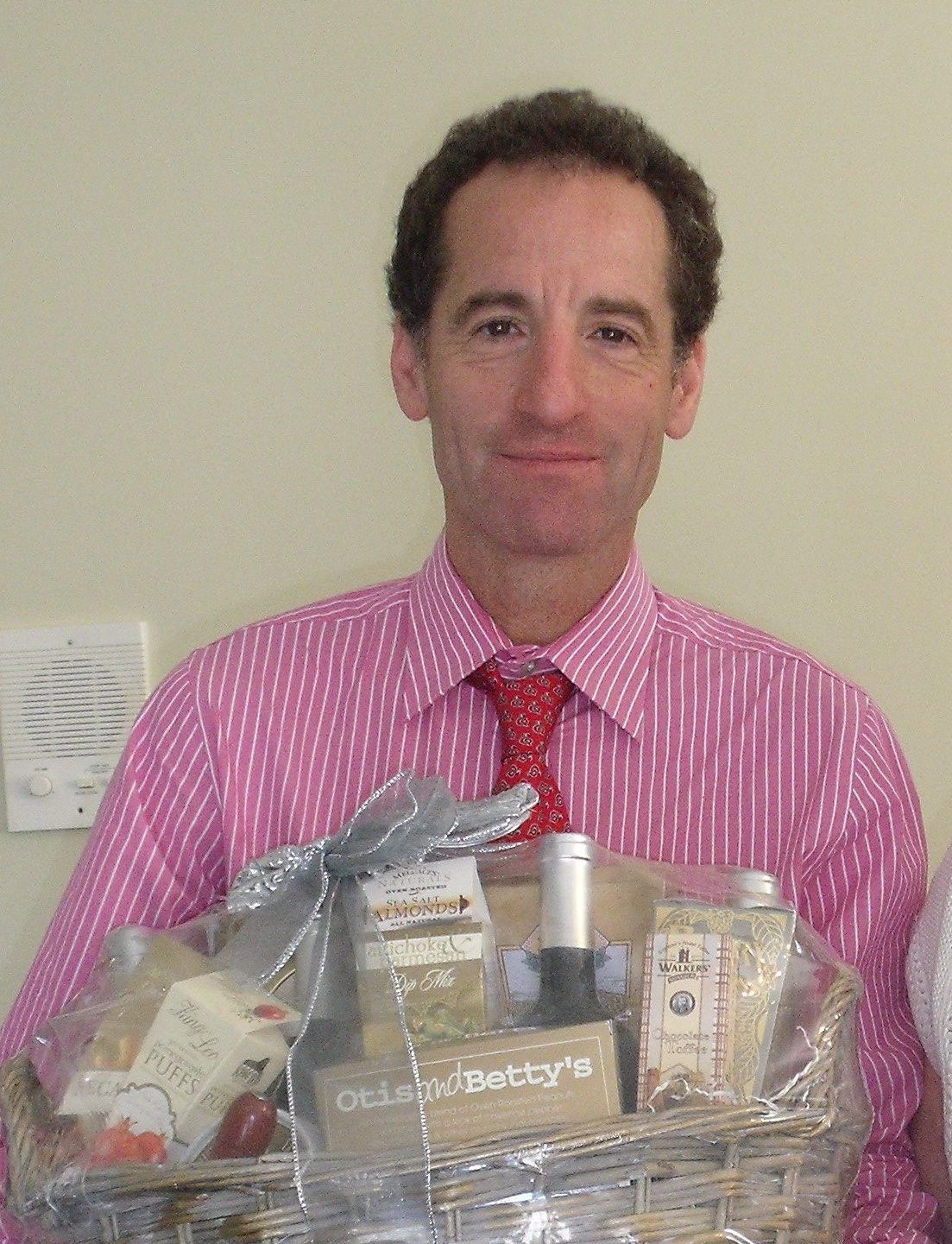
Herndon Reston Virginia spine and brain injury lawyer Doug Landau with a gift basket from a thankful neurologically disabled client
Injuries to the brain and spine do not necessarily mean the end of exercise and sports. While brain injury can be a life changing event, advances in sports medicine and rehabilitation have enabled bike crash and car accident victims to remain more active than in the past. It is important to remain upbeat, active and exercise. As we used to say at ACSM (American College of Sports Medicine) meetings, “If it isn’t physical, it isn’t therapy !” Physical and occupational therapy is essential to maximum recovery after a spine or brain injury. Nerve cells need stimulation for recovery and repair. Reorganization may occur. Synapses, that is the contacts between the nerve cells, may strengthen with stimulation and use. Sports injury lawyer Doug Landau has several hemiparetic clients who are paralyzed on one side of their bodies. To advance recovery from hemiparesis after stroke, one novel treatment, Constraint-Induced Movement therapy (“CIMT”), entails the temporary restraint of the functional limb while the patient is encouraged to carry out tasks with the paralyzed limb. According to medical researchers, CIMT produces greater improvements in movement and functional use of impaired arms and hands.
The repair of broken connections between nerve cells is poorly understood. Doctors understand that a sudden snap of the head pushes the brain so forcefully inside the skull that the long processes of the nerve cells are severed. This effect is known as axonal shear. The Abrams Landau trial team has seen this in cases of head trauma or rapid deceleration car crashes. Contracoup injuries involves the stretching and shearing of the nerves in the brain, bleeding inside the skull and intracranial swelling. Extensive data has been gathered on the effects of ischemia, that is when the blood supply to the brain tissue is disrupted, and strategies are being developed to rescue nerve cells under this condition. For more on this interesting area of brain injury research and rehabilitation, click here.