
Injured at Dulles or Reagan National Airport as a Passenger? Here’s Why Your Claim Is More Complicated Than a Standard Slip and Fall
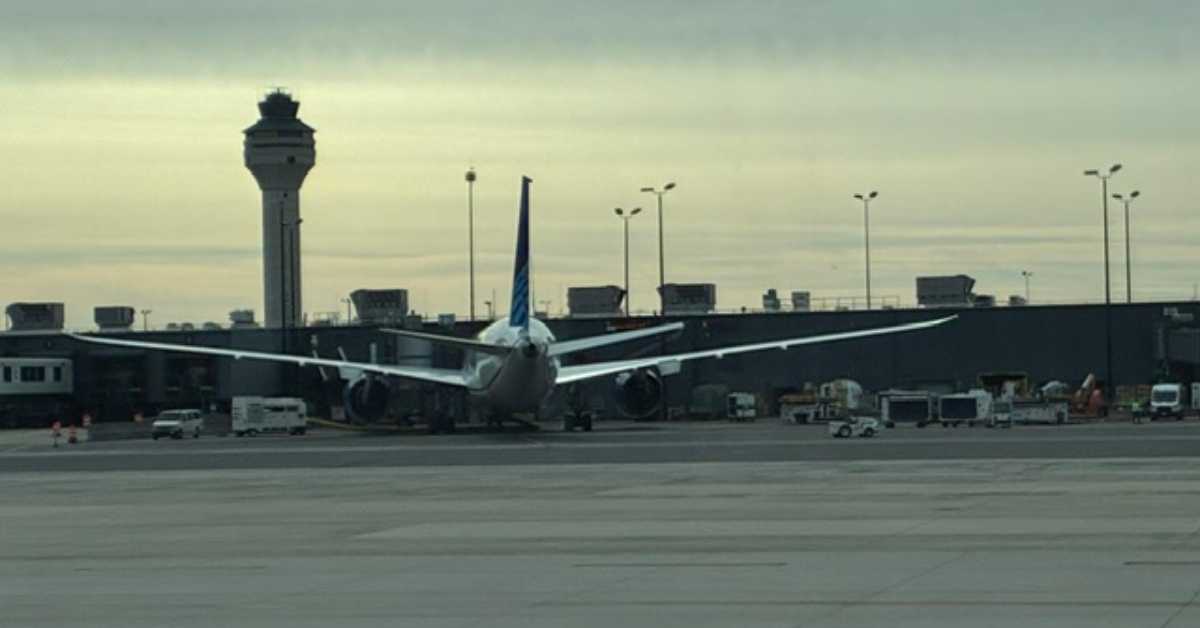
If you were hurt at Washington Dulles International (IAD) or Reagan National (DCA) Airports as a passenger, you do not have a simple slip-and-fall claim. Depending on WHERE you were injured and HOW it happened, your case may involve the Metropolitan Washington Airports Authority (MWAA), a quasi-govenmental agency that has special rules and procedures. Other airport injury cases may involve a specific airline’s liability limits under the Montreal Convention, TSA contractor liability, or a combination of all three. Each with different rules, different deadlines, and different caps on what you can recover. This changes when the injury happened in a parking garage, on a shuttle bus, or at a gate versus on the jetway or inside the aircraft itself.
Why Airport Injury Claims Are Not Like Other Premises Liability Cases
Most folks who get hurt on someone else’s property think of it the same way: the property owner was careless, you got hurt, they owe you compensation. And in a lot of situations, a grocery store, a hotel lobby, a shopping mall, that framework holds up pretty well under Virginia premises liability law.
Airport injuries are different. Not a little different. Fundamentally different.
Here is why. Dulles and Reagan National are not owned by Virginia, the federal government, or the airlines. They are owned and operated by the Metropolitan Washington Airports Authority, a regional interstate compact authority created by Congress in 1986. MWAA is its own legal entity, not a state agency, not a federal agency, which means the rules for bringing a claim against it do not fit neatly into standard Virginia premises liability law or standard federal tort law.
On top of that, the moment you step onto a jetway or into an aircraft cabin, you have crossed into territory governed by federal aviation law and international treaty. If your injury happened in flight or during the boarding and deplaning process on an international trip, the Montreal Convention (a binding international treaty) may cap what you can recover and dictate exactly how and where you must file.
And then there is TSA. Security checkpoints are staffed by federal employees. If a TSA officer’s conduct contributed to your injury, you are looking at a claim under the Federal Tort Claims Act (FTCA). A completely separate process with its own administrative filing requirements and its own strict deadlines that are different from Virginia’s statute of limitations.
We have seen passengers walk away from valid claims, or seriously undervalue them because they filed against the wrong party, missed an administrative deadline they did not know existed, or accepted a settlement from one defendant without realizing a second defendant owed them money too. At Abrams Landau, untangling this kind of multi-party, multi-jurisdiction picture is exactly the kind of work we do.
Who Is Actually Liable? It Depends on the Part of the Airport You Were Standing On
This is the question we get asked most often, and the honest answer is it depends on the precise location of your injury. Here is how we break it down.
In the terminal, on the curb, or in a parking structure: MWAA controls these areas. A claim for a wet-floor fall, a defective escalator, a shuttle bus accident, or a poorly maintained walkway would generally run against MWAA. Cases that occur “outside” on the curb and before a passenger enters the “sterile area” where TSA checks you out, are handled differently than cases after the x-ray machines and wanding officers.
At the gate or on the jetway: This is where it gets complicated fast. The gate area may be leased by the airline. The jetway may be maintained by the airline, by MWAA, or by a ground handling contractor. Many times the flight may indicate it is run by a major air carrier, but in reality it is a regional jet subsidiary or other “alliance” or airline “partner.” Figuring out who had control of the specific surface or piece of equipment that caused your injury requires a careful look at the lease agreements and maintenance contracts. Documents the airline and MWAA are not going to hand over voluntarily.
If you were hurt on a domestic flight, the airline’s liability is governed primarily by federal law and the airline’s own contract of carriage. The Montreal Convention does not apply to purely domestic routes. That does not mean the airline has no liability, it means the legal framework is different, and the defenses available to the airline are different.
On the aircraft international flight is where the Montreal Convention controls. For international travel, the Convention sets a liability limit of approximately 151,880 Special Drawing Rights (SDRs). Roughly $200,000 USD at current exchange rates for passenger injury claims, though that cap can be broken if the airline is found to have acted with intent or reckless disregard. The Convention also requires that suit be filed in one of a limited number of designated jurisdictions, and there is a two-year statute of limitations that runs from the date of arrival or the date the aircraft was scheduled to arrive. Miss that window and your claim is gone.
At the security checkpoint, TSA officers are federal employees. If a TSA officer’s negligence (a rough pat-down, a failure to maintain safe conditions at the checkpoint, an improperly operated screening machine) contributed to your injury, you must file an administrative claim with the TSA before you can sue. That administrative process has its own deadlines, and if you skip it and go straight to court, your case will be dismissed. The ABRAMS LANDAU team was involved where the TSA screeners treated a woman with an external feeding tube so roughly after she asked to be hand checked and patted down, as seen on the airport video, that they dislodged her vital tubing, requiring multiple surgeries and hospitalizations!
The Evidence Problem at IAD and DCA
One thing we tell every client who calls us about an airport injury is do not wait. Airports are among the most heavily surveilled environments in the country, but that surveillance footage is not preserved indefinitely. MWAA and the airlines have their own retention policies, and once that footage is overwritten, it is gone.
The same is true for incident reports. If you slipped on a wet floor at Dulles and airport staff filled out an internal incident report, that document exists. But getting it requires knowing how to ask for it and who to ask. We know how to send “preservation letters” to MWAA, to the airline, and to any ground handling contractor involved, and we do it fast because in our experience, the window between an injury and the loss of critical evidence is shorter than most people expect.
We will never tell you what you want to hear just to get you in the door. If we look at the facts of your airport injury and we do not think there is a viable claim, we will tell you that directly because your time is too valuable to waste on a case that is not there. But if there is a claim, we will make sure every responsible party is identified and every piece of evidence is preserved before it disappears.
What to Do Right Now If You Were Hurt at Dulles or Reagan National?
Here are the steps that matter most in the immediate aftermath of an airport injury.
Get medical attention and document everything. Photographs of the hazard, your injuries, and the exact location. Names and contact information of any witnesses. The names of any airport or airline employees who responded.Other travellers are keen to make their flights,connections and/or get home. Get business cards, as for mobile numbers. Too many cases get lost when their are no corroborating witnesses, evidence or both.
Do not give a recorded statement to the airline or MWAA’s insurance representative. They will ask. You should decline until you have spoken with a lawyer. Anything you say will be used to minimize your claim.
Find out whether your flight was domestic or international. This single fact changes the legal framework that applies to your injury.
Contact a lawyer who actually knows airport injury law, not just general premises liability. The Dulles corridor and Reagan National are territory we know well, both in court and on the road. We have handled cases involving MWAA, airline contractors, and the multi-party liability that comes with federally regulated airport environments.
If you or someone in your family was hurt at IAD or DCA, whether it was a fall in the terminal, an injury on the jetway, or something that happened in flight, call or text us at (703) 796-9555 or email frontdesk@landaulawshop.com. The first conversation is free and confidential, and we will give you a straight answer about what you are actually dealing with.